
After the Whirlwind
Seeing what remains when something has already been taken

Dear Friends,
There is a particular kind of quiet that comes the day after Easter.
Not the stillness of emptiness, but of something that has already passed through you.
After the past week’s services—Palm Sunday, the movement into Maundy Thursday, the descent into darkness and stripping of the altar, the weight of Good Friday, the return on Saturday to prepare it again and adorn the sanctuary with an abundance of flowers, and finally the brightness of Easter morning—I found myself not uplifted in the way I expected, but spent.
As though I had walked something in my body, not just observed it.
And beneath that weariness, something harder to name:
a sense that something is shifting—
but not yet fully formed.
For a long time, I have thought of life in terms of beginnings and endings. Seasons that open, seasons that close. But standing here again, at Easter, I begin to wonder if that language is too clean for what actually happens.
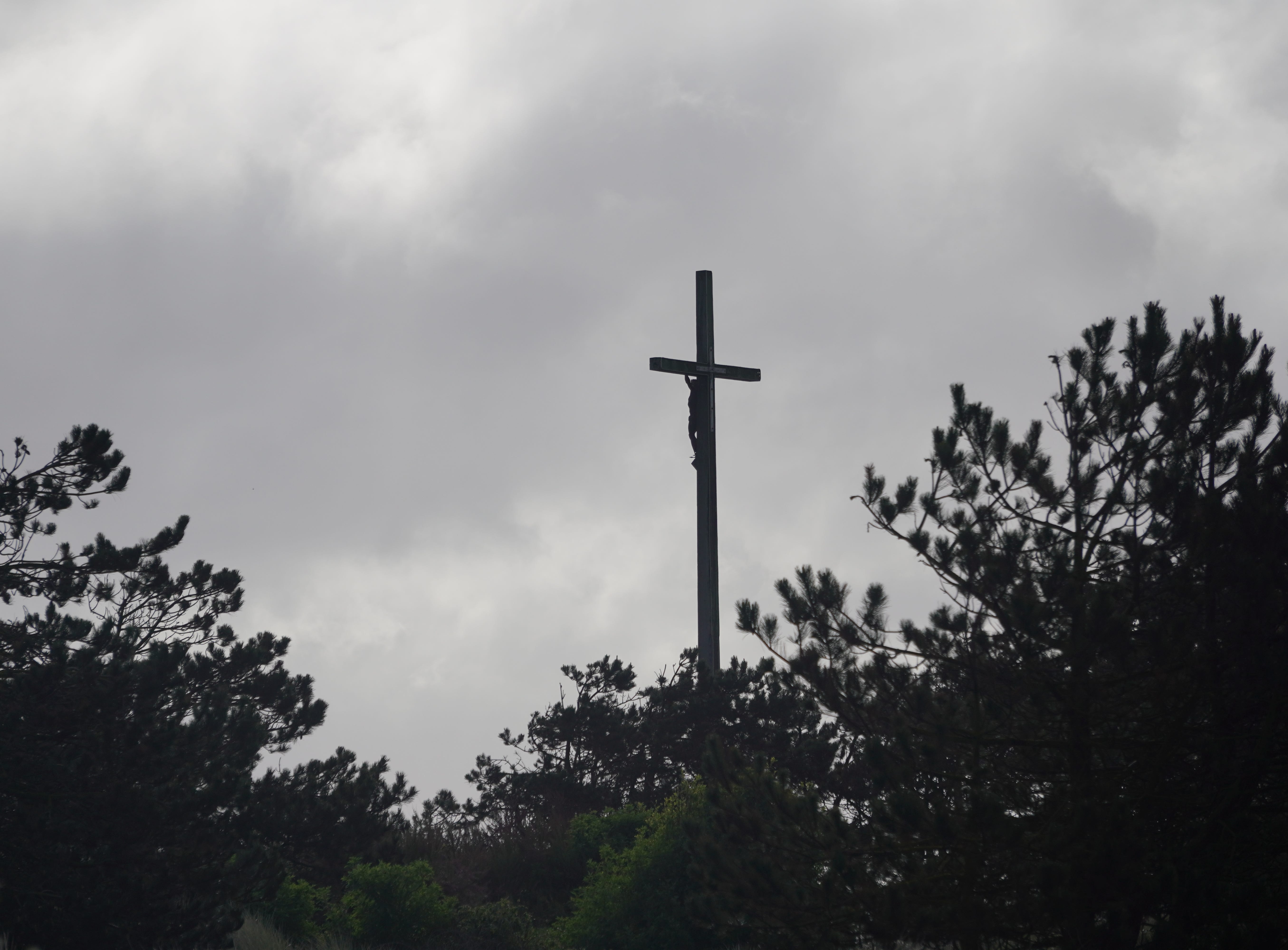
Because what I am living does not feel like a circle.
It feels like a return.
But not to the same place.
More like a spiral—
one that carries you back through familiar ground, but at a different depth, a different height, a different understanding.
And it is here, in that quiet after Easter, that I find myself thinking of Elijah and Elisha in 2 Kings 2.
Where Easter holds resurrection and life beyond death, this chapter reveals something parallel: departure and continuation.
Elijah knows he is nearing his end. There is no panic, only a solemn movement forward through familiar places—Gilgal, Bethel, Jericho, and the Jordan—like a closing of a life’s path.
At each place, Elijah tells Elisha to stay behind. But Elisha refuses.
Three times he answers:
“As surely as the Lord lives… I will not leave you.”
That refusal is not dramatic. It is steady.
Not the urgency of someone trying to secure something for himself, but the quiet insistence of one who understands that some moments cannot be entered halfway.
Elisha stays.
He follows through the familiar places, through what must have felt like a procession toward something unnamed but inevitable. Others sense it too—the company of prophets watching from a distance, aware that something is about to be taken. Still, Elisha does not turn aside.
When they reach the Jordan, Elijah strikes the water with his cloak, and it parts. The two cross over the riverbed on dry ground—one last threshold.
And then it happens.
A chariot of fire.
Horses of fire.
A whirlwind.
And Elijah is taken up to heaven.
What lingers is not only the spectacle, but the condition that precedes it.
Elijah tells Elisha:
“If you see me when I am taken from you, it will be yours.”
If you see.
There is something in that which presses gently against how I so often move through my own life.
I want to name what is happening. To define it. To call it a beginning so I can step into it with clarity. But this past week—and perhaps this past year—has not unfolded that way.
It has been something closer to Elijah’s road.
A movement through familiar places.
A sense that something is ending, even as it is not yet gone.
A quiet awareness that what comes next cannot be forced into being.
And then, moments that arrive without announcement—moments that ask not for interpretation, but for attention.
I see now that I did not simply attend Holy Week.
I walked it.
I worked silently with others, stripping the altar—something in me recognizing the gesture of letting go.
I remained through Good Friday—the weight of it not symbolic, but felt.
I returned on Saturday—hands participating in the slow work of preparing beauty again.
And then Easter morning—light, yes, but not light without cost.
No wonder I feel spent.
Because this was not observation. It was participation.
It would be easy, today, to call this a new beginning. To gather the language of renewal and place it neatly over what I feel.
But that word—beginning—feels too certain for what this is. Because what I am experiencing does not feel like stepping into something entirely new. It feels like standing at a threshold where something has been taken—
and something else, not yet fully understood, has been left behind.
Elisha tears his clothes when Elijah is taken. There is grief in the moment of receiving. Loss and continuation arrive together.
This is the part we often try to separate.
We want resurrection without rupture.
We want clarity without unmaking.
But Scripture does not offer us that version of the story.
And yet, the story does not end in the whirlwind.
Elisha picks up the cloak that has fallen. He returns to the Jordan.
He stands again at the edge of the water—not as he was before, but not yet fully what he is becoming—and he strikes the water, asking:
“Where now is the Lord…?”
It is not a declaration. It is a question shaped by what he has witnessed.
Perhaps this is where I find myself now.
Not at the beginning of something clearly defined, but standing, having walked through something real, holding only what has been given.
The quiet.
The weariness.
The small stirrings of life that do not yet have language.
Even the simple act of sketching the cross this past week—hands moving, colour laid down without striving—feels, in its own way, like a small lifting of the cloak.
Not a grand gesture. But a response.
It occurred to me today that endings and beginnings are often the same moment, seen from different angles.
Good Friday and Easter are not separate movements.
They are one.
And perhaps this quiet I find myself in now is not emptiness, but the space where something has already begun—just beneath the surface, still taking root.
For now, it is enough to carry what has been given without forcing it into shape.
And when the time comes—not to rush ahead, but simply to take the next step forward,
with eyes open,
and heart steady,
ready to see.
— Kiernan