
Ripening Well
On creativity, retirement, and the slow fruit of a faithful life

Friends,
There comes a season in life when the old measures begin to lose their authority. Not all at once. Quietly at first.
You still move through the world carrying them — success, usefulness, productivity, recognition — but they no longer settle in the soul the way they once did. They feel strangely hollow, like coins from a country you no longer live in.
Earlier this week, I spent nearly an entire day reflecting on what it means to grow older faithfully.
Not simply older in years, but older in spirit.
How does one enter the later years of life without becoming consumed by anxiety over relevance, legacy, accomplishment, or the slow narrowing of the world’s attention? What does “the fruit of good living” look like when career ambitions fade, children are grown, and society quietly begins placing you at the margins?
I do not think I am alone in these questions.
“The afternoon of life is just as full of meaning as the morning; only, its meaning and purpose are different.” ~ Carl Jung
For much of my life, I believed meaning was tied to becoming something visible. Even in my creative life, I carried a quiet but persistent belief that if I could only finish the novel, publish the book, receive recognition, perhaps some deeper uncertainty within me would finally settle.
But lately I have begun to wonder if I placed too much weight upon the work itself.
Not because the work does not matter. It does. Deeply.
But perhaps no single creative act was ever meant to carry the burden of proving a life worthwhile.
A few days ago, I read an article about feeling stuck — in life, in work, in ourselves — and recognized the feeling immediately. I have felt it in my writing for some time now. Not because I no longer love stories, but because somewhere along the way the novel became entangled with questions far larger than art itself: worth, identity, legacy, even redemption.
And yet, while my relationship to the novel has felt strained, something else has quietly come alive.
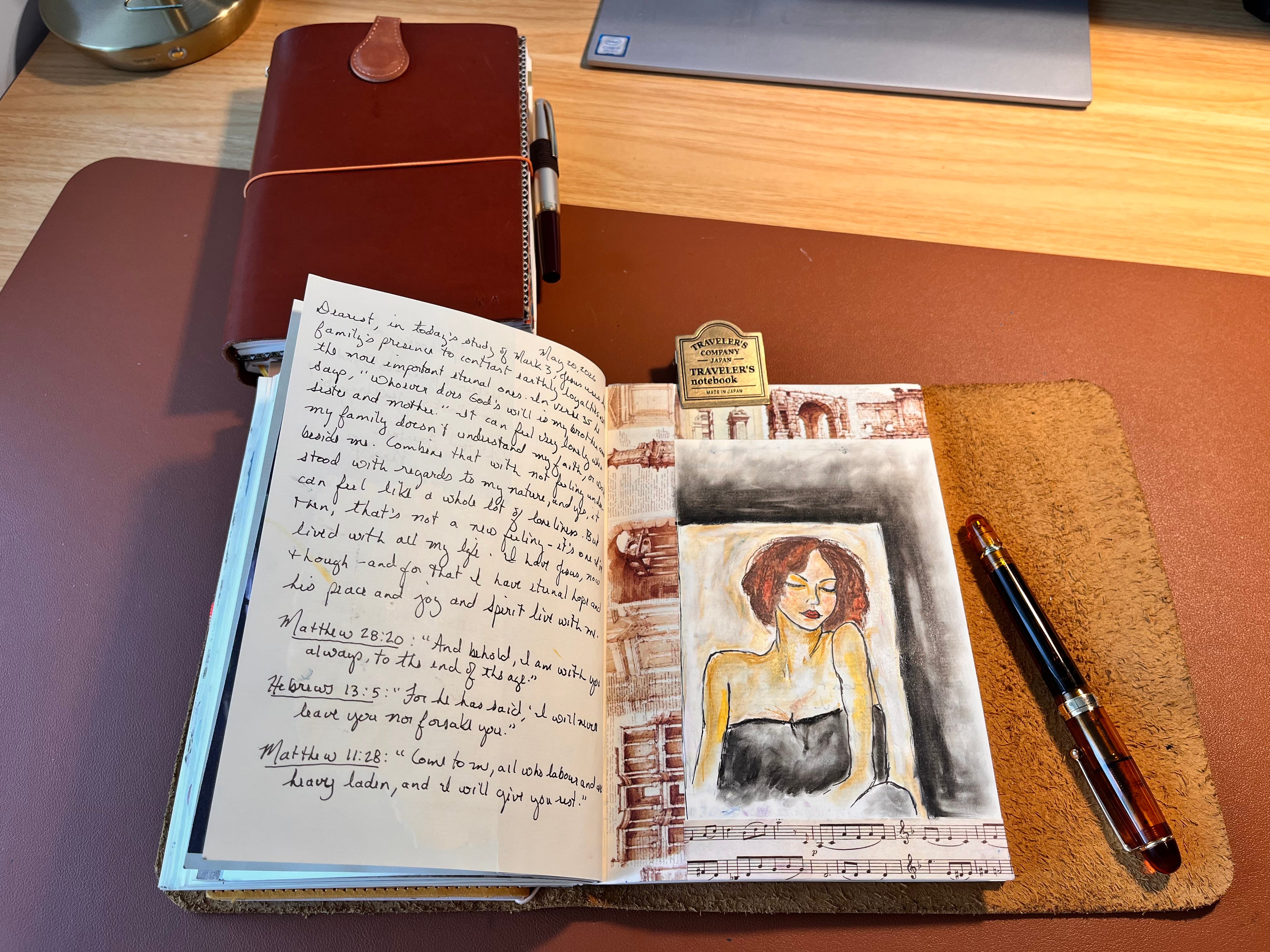
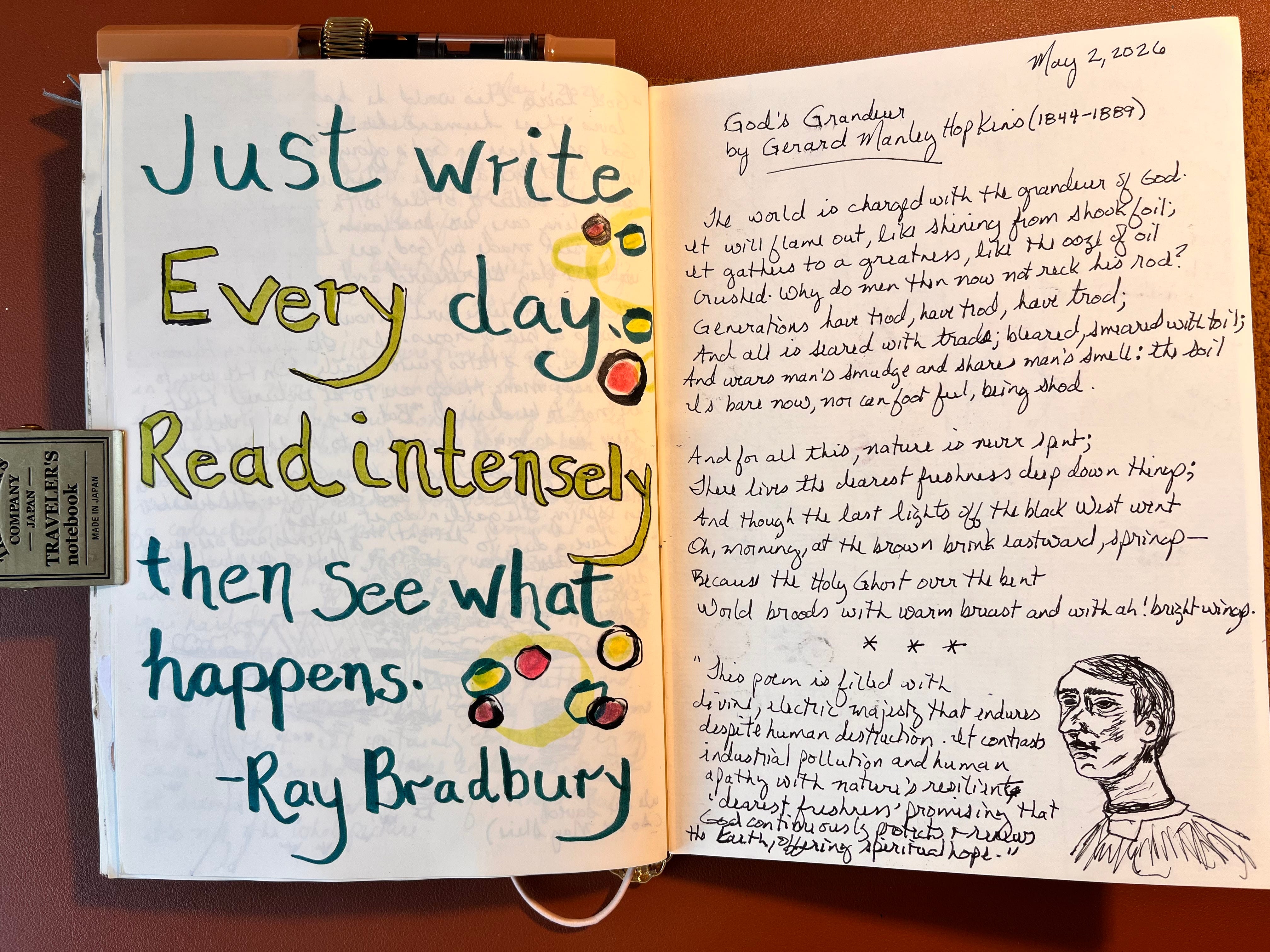
For the past year, I have kept journals unlike any I have kept before. Not merely pages of emotional processing or daily record, but layered books of reflection and attention: written prayers beside magazine clippings, sketches beside Scripture passages, copied quotations beside memories, scraps of beauty gathered from ordinary days.
Part writing.
Part sketchbook.
Part commonplace book.
Part spiritual companion.
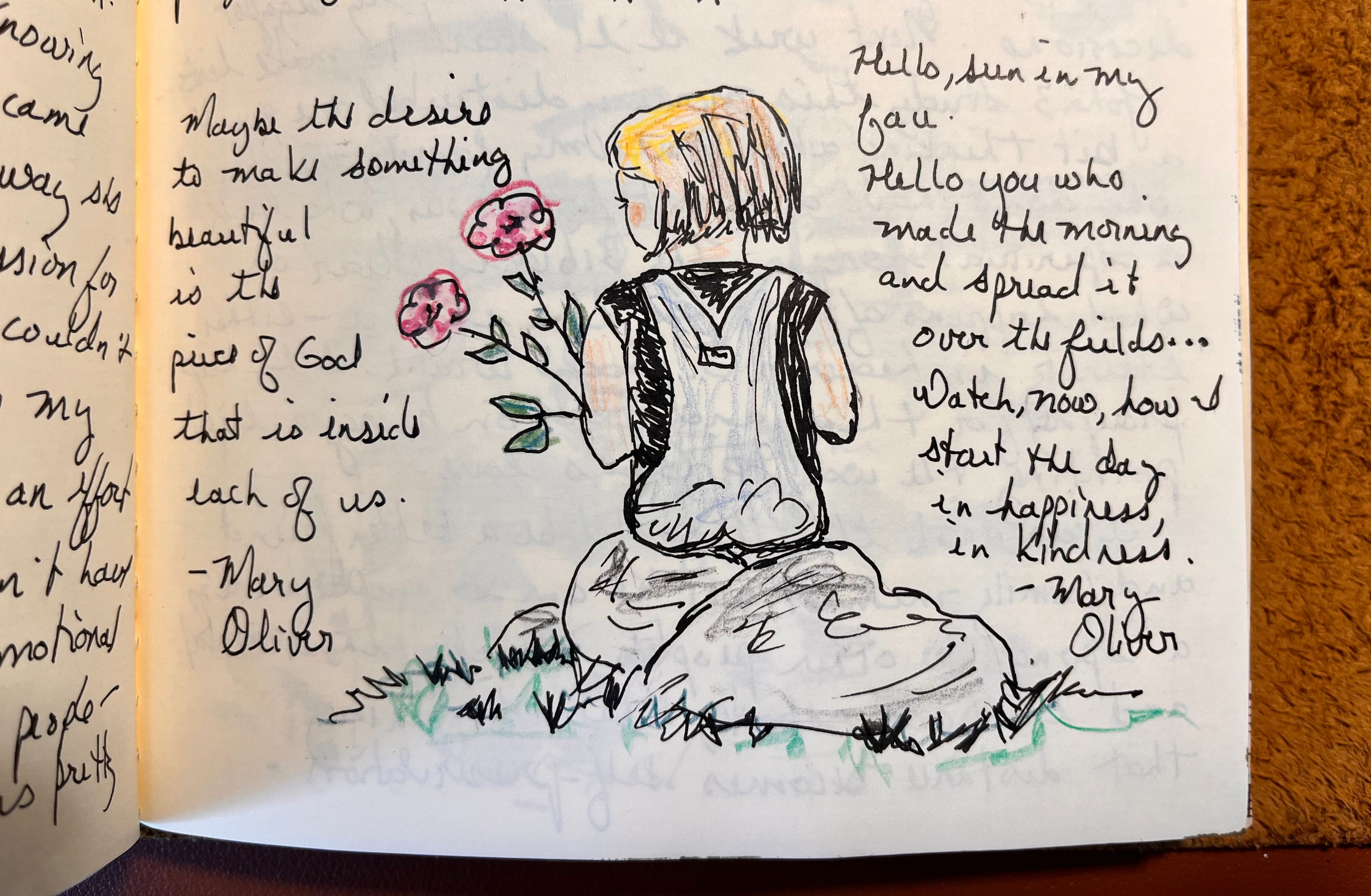
For the first time in my life, I find myself revisiting my journals not with embarrassment or heaviness, but with nourishment. I return to them and feel encouraged by the person who made them.
That realization startled me. Because perhaps what I have been creating is not simply documentation, but evidence of a soul becoming more awake to its own life.
We live in a culture obsessed with public output. Everything is measured by reach, visibility, scale, applause. Even our hobbies are quietly pressured toward monetization or mastery. We are encouraged to become brands rather than people.
But spiritual life moves differently. It asks us to pay attention. To notice. To cultivate inwardness. To become rooted rather than impressive.
At church recently, while speaking with our rector about volunteering and spiritual gifts, she said something that shifted something within me: spiritual gifts should not only be things we are skilled at, but things that feel life-giving.
I have carried those words with me ever since.
Because there are many things we can do competently that quietly drain the spirit. And there are other things — often smaller, quieter things — that leave us strangely enlarged after we do them.
A conversation after church.
Singing among others.
Writing in a journal no one may ever read.
Walking slowly beneath trees.
Studying Scripture not for answers alone, but for transformation.
Perhaps this is part of spiritual maturity: learning to recognize what brings life, rather than merely what brings achievement.
The older I grow, the more I suspect that much of modern life trains us toward spiritual immaturity. We are taught to seek identity through status, wealth, productivity, youthfulness, accomplishment. We are taught to fear obscurity. To fear slowing down. To fear becoming ordinary.
And yet Christ speaks so often in the language of fruit. Not accomplishment. Fruit.
Something grown slowly.
Something cultivated.
Something nourished in hiddenness before it is ever seen.
Love.
Joy.
Peace.
Patience.
Kindness.
Goodness.
Faithfulness.
Gentleness.
Self-control.
None of these can be rushed. None can be performed into existence.
They must ripen.
I wonder now if retirement — at least in its healthiest form — is not meant to be a shrinking of life, but a deepening into it. A gradual release from striving toward attentiveness. A season not of disappearance, but of refinement.
Not all ambitions disappear. I still hope my novel may one day find its readers. I still feel the ache of wanting the work to matter in the world. But I no longer want my entire sense of worth tied to whether literary culture approves of the stories I long to tell.
Because literary culture changes. Trends change. The world’s attention drifts endlessly from one thing to another.
But the deeper work of becoming fully human remains.
And perhaps legacy is not what I once imagined either.
Perhaps legacy is less about leaving behind something impressive, and more about leaving behind evidence of a life honestly lived.
A journal filled with prayers and pressed flowers.
Margins crowded with quotations.
A record of wrestling and wonder.
Proof that someone paid attention while they were here.
I think of my son someday opening these journals after I am gone. Or perhaps my niece. Or perhaps no one at all.
And strangely, that matters less to me now than it once would have. (Although, KB, please don’t toss them into the bin. xx)
Because the keeping of them has already changed me.
They have become less a monument and more a companion.
Less performance and more presence.
And perhaps that is the quiet work of these later years:
not to become more important,
but more awake.
Not to strive endlessly toward significance,
but to become faithful stewards of the life directly before us.
To notice the light.
To tend the soul.
To gather what is beautiful.
To remain open to God.
To ripen well.
Grace and peace,
— Kiernan
A lovely piece, Kiernan! Such helpful reflection on what our soul's true ambition should be.
“Perhaps legacy is less about leaving behind something impressive, and more about leaving behind evidence of a life honestly lived.”
As I finish my MFA program, I’ve been pondering the last few years. The chasing…taking in all the industry advice thrown in with studying the craft and striving to apply it because of the hurdles that exist within said industry…striving that has compromised “the evidence of a life lived honestly.”
This is the conclusion I came to as I considered the whirlwind of the last few years and contemplated how I want to move forward. Your words echoed the still, small voice that has been speaking.
You are a beautiful writer, Kiernan, and I needed this today. So, thank you.