
When Spring Isn’t Spring Yet
what a small cabin taught me about the wisdom of returning seasons

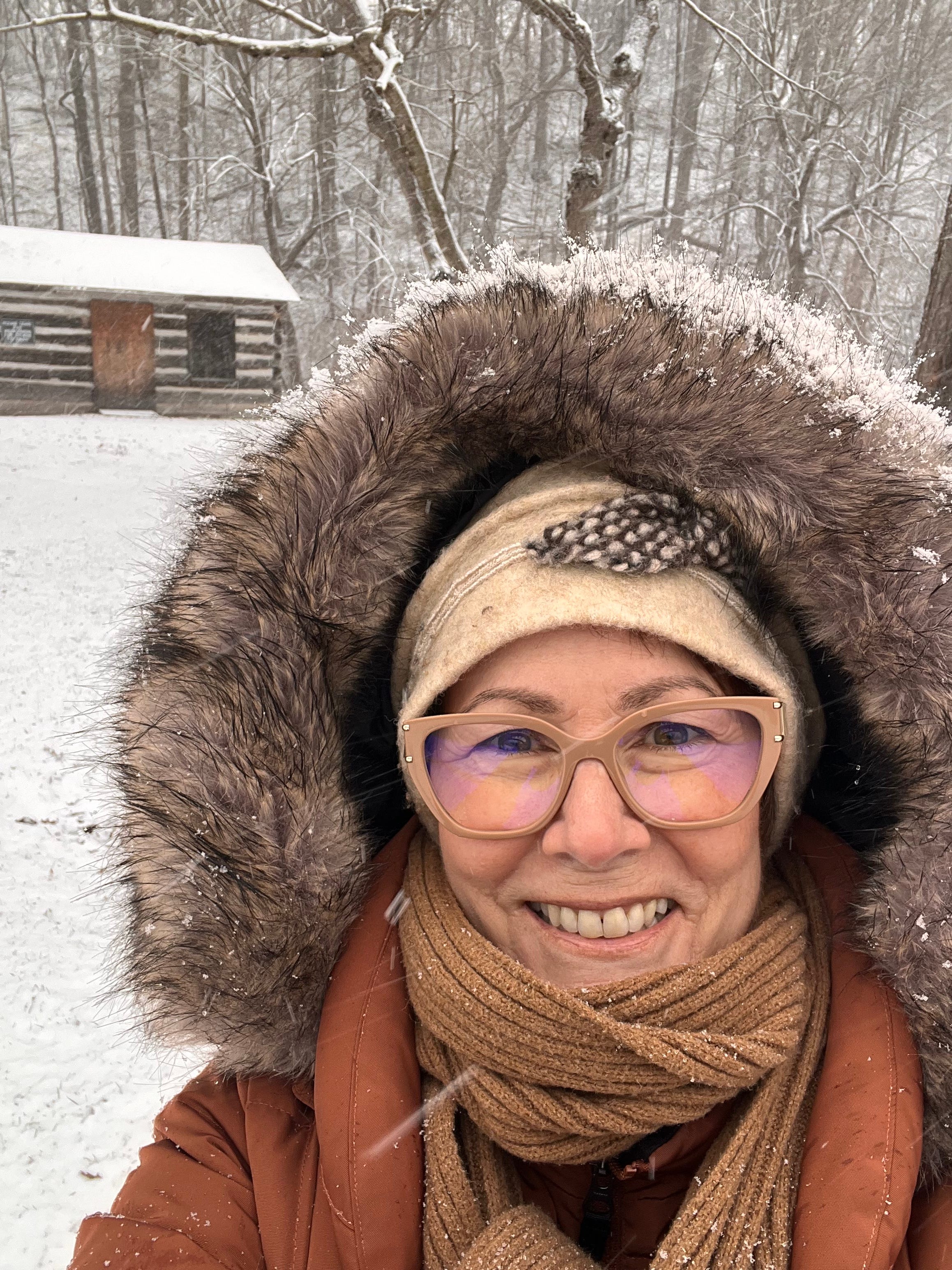
Earlier this week I shared a reflection about inheritance—about the things we carry quietly through time.
A few days later, walking past a small cabin along my usual route, I was reminded that time has another way of teaching us: through the turning of the seasons.
On one of my regular walks, I passed a small log cabin I have noticed many times before. That morning the ground lay deep in snow, the clearing around it a field of white broken only by faint animal tracks. The trees stood bare and silent behind the little structure, their branches dark against the pale winter sky.
I passed a small log cabin I have noticed many times before. That morning the ground lay deep in snow, the clearing around it a field of white broken only by faint animal tracks. The trees stood bare and silent behind the little structure, their branches dark against the pale winter sky.
The cabin looked as though it had been holding its breath all winter.
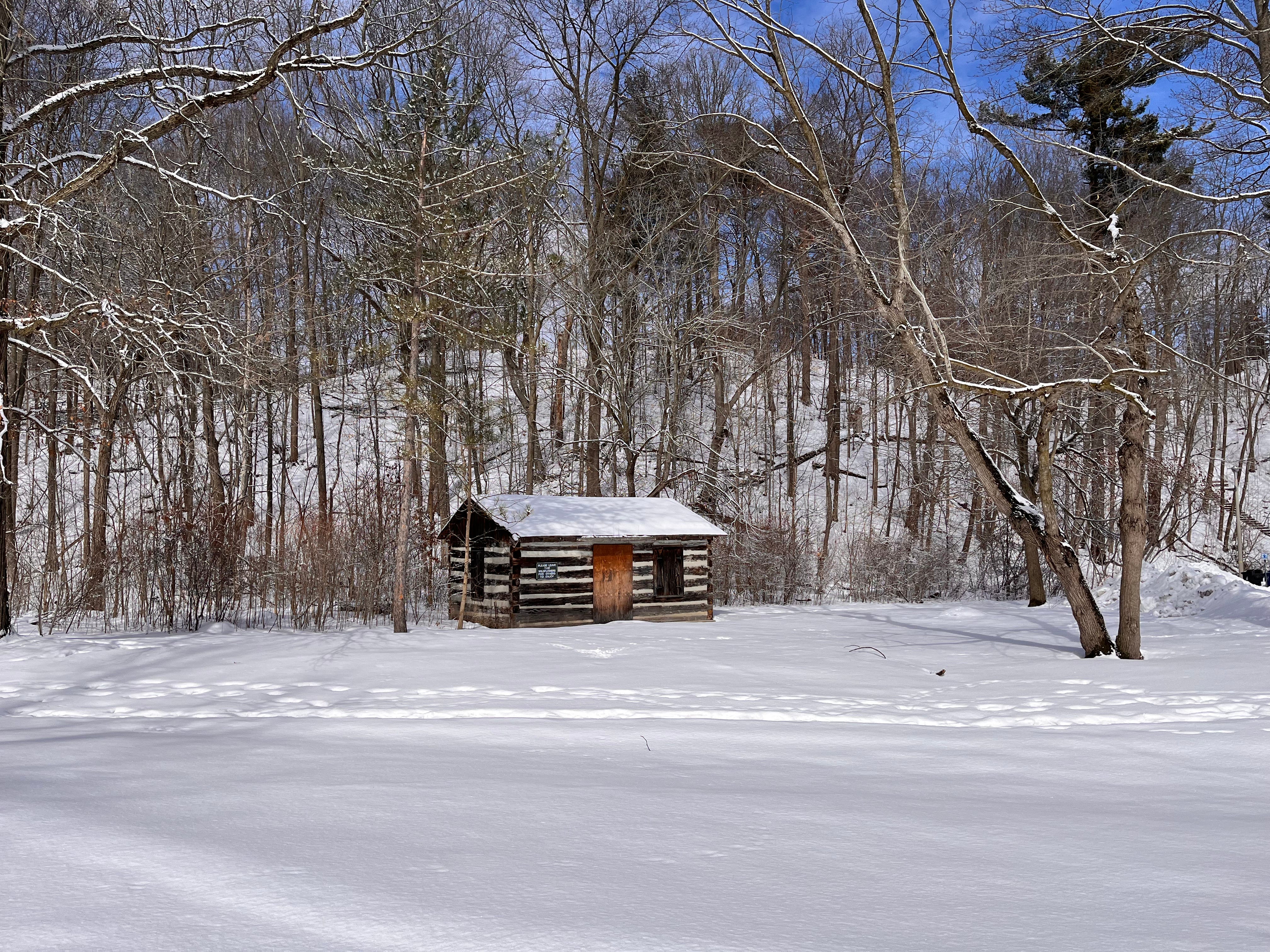
I stopped long enough to take this photograph. The scene felt complete in itself: winter settled firmly over the landscape, the season doing exactly what it was meant to do.
I have passed this cabin many times over the years. Each time I find myself wondering about the people who might once have lived there. Homesteaders, perhaps. People who built their lives close to the land. People who understood something about patience and weather.
The cabin sits at the edge of a small clearing with a wooded hill rising behind it. In summer the leaves close in so that the structure appears almost hidden. In winter it stands exposed, the dark logs weathered by decades of wind, snow, and sun.
It is not large. Just a simple building of logs, with a small door and a single window. There is something humble about it, something steady and enduring.
A couple of weeks after taking that photograph, I walked the same path again.
This time the snow had melted. The clearing had softened into uneven patches of green, and water ran through a shallow dip where the snowmelt gathered before slipping quietly into the woods. The air had warmed enough that I walked in a t-shirt, grateful for the brief generosity of the sun.
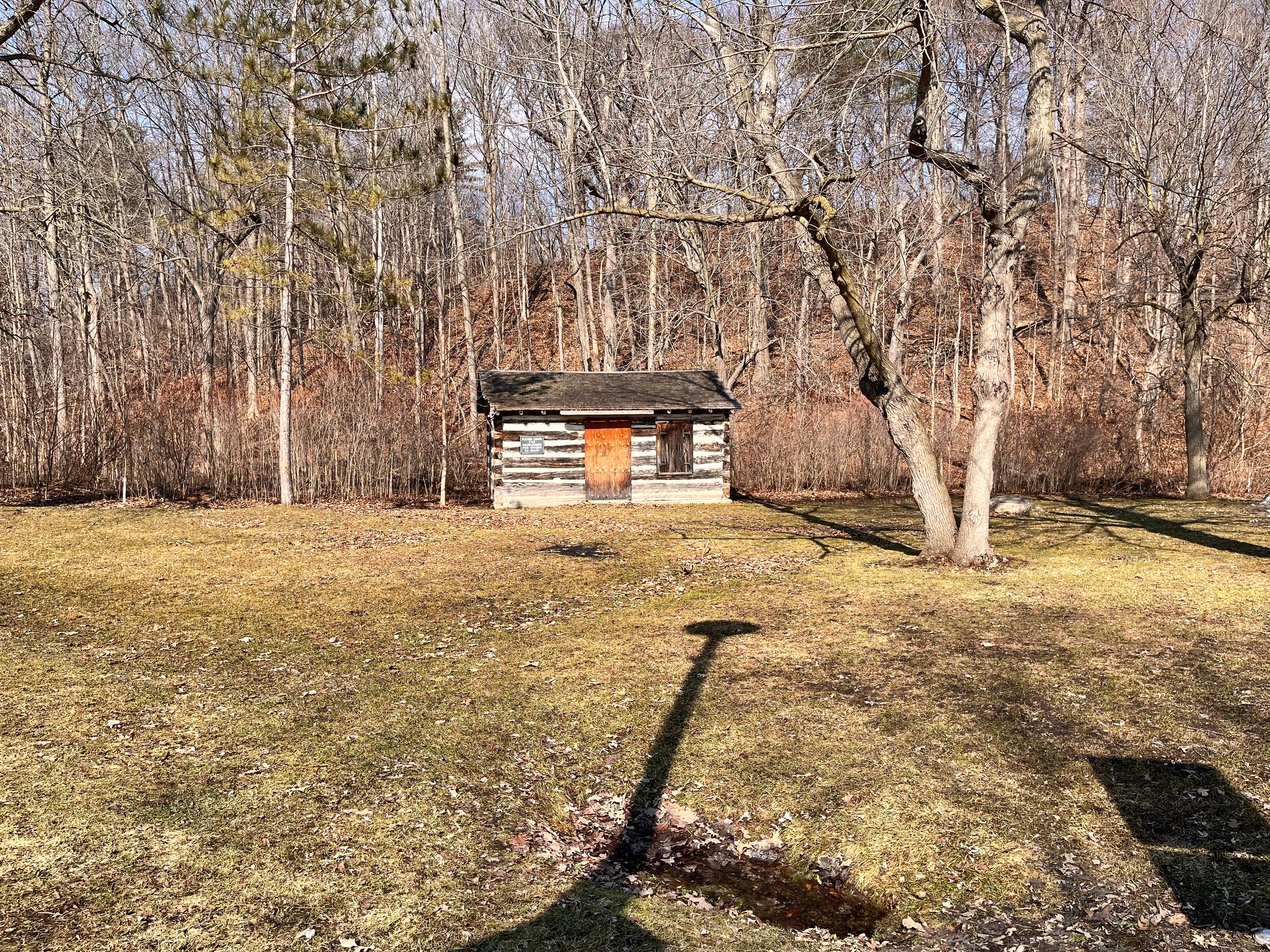
For a moment it felt as though spring had arrived early.
Then, a few days later, the storm returned.
When I passed the cabin again, snow was falling thickly through the trees. The clearing had turned white once more. The ground that had seemed ready for spring only days before lay covered again in winter.
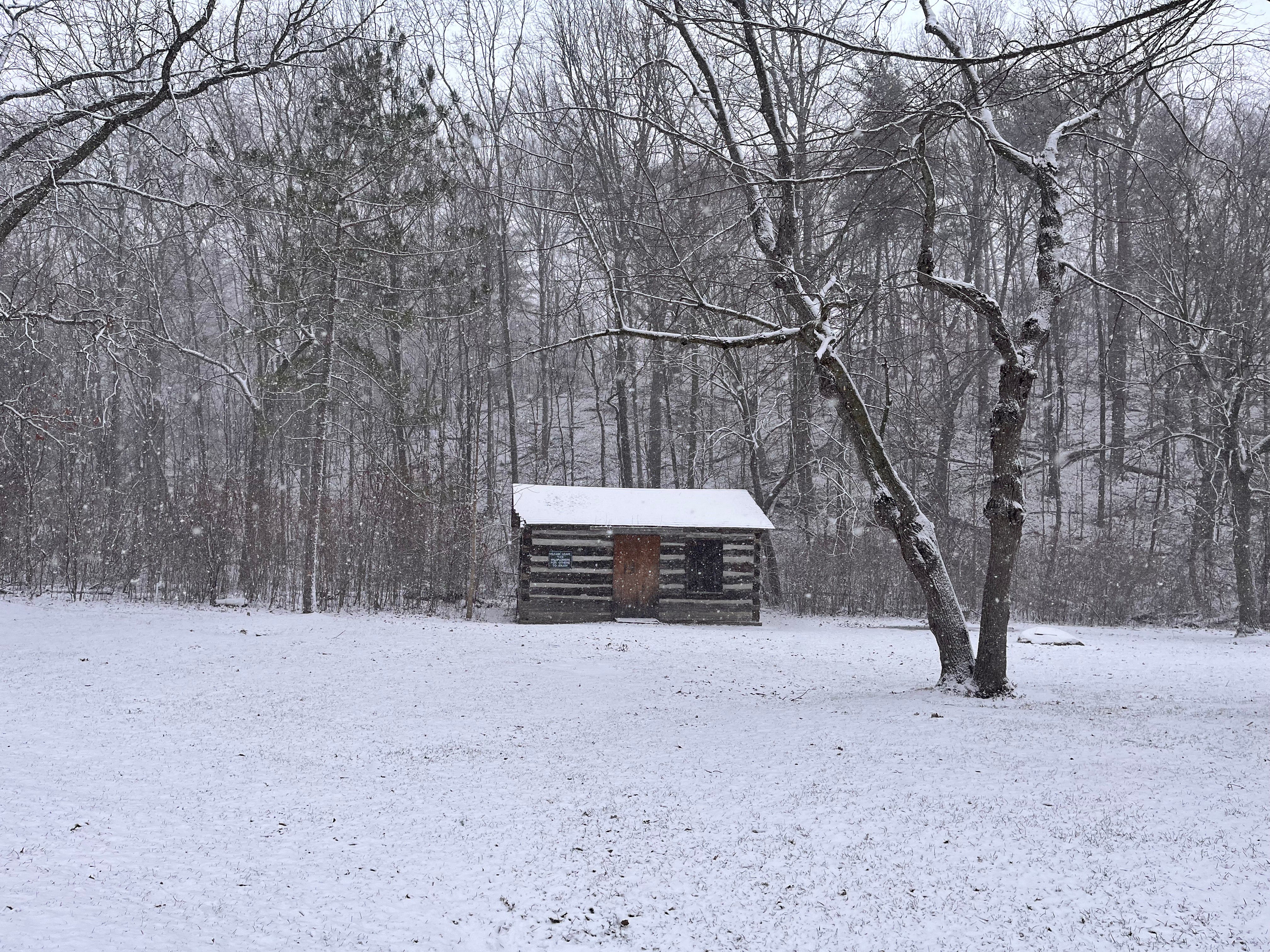
Coat to t-shirt and back to winter coat in the span of a few weeks.
The seasons, it seems, are not in a hurry to move neatly from one chapter to the next.
Standing there watching the snow fall, I found myself thinking about how often life moves the same way. Not in straight lines, but in circles and returns.
We experience moments that feel like thaw.
A long grief softens. A difficult season seems to lift. Something in our lives that has been frozen begins to move again. Light returns to the landscape and we allow ourselves to believe that winter has finally passed.
Then, unexpectedly, the cold returns.
Old questions reappear. Old struggles surface again. The storm we thought had moved on circles back across the sky.
When that happens it is easy to believe something has gone wrong—that we have somehow lost the ground we thought we had gained.
But the land tells a different story.
Anyone who has lived long enough in northern climates knows not to trust the first warm days of late winter. The earth warms, then freezes again. The snow retreats, then returns. The land moves forward in hesitations, in pauses, in small retreats that are still part of the larger turning of the season.
Farmers have known this for generations. The land does not rush.
Standing there in the falling snow, I was reminded that the ancient wisdom literature of Scripture speaks about time in much the same way.
“To everything there is a season,” writes the Teacher in Ecclesiastes, “and a time for every purpose under heaven.”
The verse is often read as a comfort during life’s turning points, but the passage itself moves not in straight lines but in pairs, in rhythms, in returning movements:
a time to plant
and a time to uproot.
a time to weep
and a time to laugh.
a time to mourn
and a time to dance.
The wisdom of the passage is not that we can control the seasons of our lives, but that we are meant to live within them.
Watching the snow circle slowly down through the clearing, I realized that the land had been saying the same thing all along.
What struck me most, standing there in the storm, was how little the cabin seemed to care about these fluctuations.
The seasons whirl around it—snow, thaw, sun, snow again—and yet the cabin remains.
The trees bend with winter winds. The ground freezes and softens. The sky shifts moods from clear blue to storm gray. But the small structure simply stands where it has always stood.
It has seen far more seasons than the few weeks captured in my photographs.
It has watched many winters settle and recede. Many springs arrive slowly, in hesitant steps. Many summers rise green and full, only to fold again into autumn.
Perhaps the wisdom is not in predicting the seasons, or even in trying to hurry them along.
Perhaps the wisdom lies in becoming a little more like that cabin.
To stand where we are planted.
To remain steady while the weather of life moves through its cycles.
To accept that growth rarely arrives in straight lines. That a thaw followed by another frost is not failure, but simply part of the turning of the year.
And so the pilgrim keeps walking.
Past the cabin in winter.
Past it again when the grass begins to show through.
Past it once more when the storm returns.
Watching the seasons circle and return, and learning—slowly—to trust that they know what they are doing.
— Kiernan
Yes…that cabin speaks of fickle days and a steadfast life.
My imagination’s running…Thanks for this, Kiernan.
Kiernan...this came at just the right time for me. Grief is a lot like this, you think the pain has passed and then the storm hits and you are buried again. But we need to keep standing, hoping we become stronger as the storms do not go away. Thank you for your beautiful writing and your beautiful self. Hugs.